Shredded Is Not the Same as Healthy
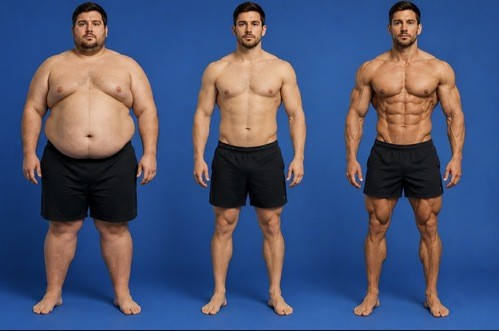
Scroll through social media for five minutes and you might come away believing that the ultimate picture of health is a body with bulging veins, and visible abdominal muscles. In today’s fitness culture, “ripped” has become synonymous with “healthy.” But medically speaking, those are not the same thing.
There is no question that reducing excess body fat improves health. Carrying too much visceral fat — the fat stored around internal organs — is strongly associated with higher risks of diabetes, high blood pressure, heart disease, sleep apnea, fatty liver disease, and several cancers. Studies consistently show that maintaining a healthy body composition and staying physically active lowers the risk of premature death.
But there is an important distinction between being lean and being extremely lean.
A healthy body does not require a “stage-ready” physique. In fact, the hyper-muscular, ultra-low-body-fat look celebrated online is often difficult to maintain without behaviors that may actually compromise long-term health. Competitive bodybuilders and influencers frequently achieve these physiques through cycles of severe calorie restriction, dehydration, excessive training volumes, performance-enhancing drugs, and hormone manipulation. While not everyone pursuing a muscular physique engages in these practices, the culture surrounding extreme muscularity can normalize them.
The science on muscle mass itself is actually very positive. Higher muscle mass is associated with better metabolic health, lower frailty risk, improved insulin sensitivity, stronger bones, and lower mortality rates as we age. Strength training is one of the best things people can do for healthy aging.
But more is not always better.
There appears to be a point where the pursuit of maximal muscularity stops being about health and starts becoming physiologically stressful. Recent research on professional bodybuilding athletes found significantly higher rates of sudden cardiac death compared with amateur competitors. Autopsy findings frequently showed enlarged hearts and abnormal thickening of the heart muscle. Much of this risk is believed to be related to anabolic steroid use and other performance-enhancing drugs, which can negatively affect blood pressure, cholesterol, heart rhythm, and cardiac structure.
Even without steroids, maintaining extremely low body fat for prolonged periods may have downsides. In men, very aggressive dieting and chronically low energy availability can reduce testosterone levels, impair recovery, worsen mood, and increase injury risk. In women, excessively low body fat can disrupt menstrual cycles and impair bone health. The body interprets chronic energy deprivation as a stress signal.
There is also a psychological component that deserves attention. Social media has increasingly blurred the line between fitness and appearance obsession. Research has shown that constant exposure to idealized hyper-muscular physiques is associated with body dissatisfaction and increased interest in anabolic steroid use, particularly among young men.
Ironically, some of the healthiest people do not look “shredded” at all.
The strongest predictors of longevity are remarkably boring: regular exercise, good cardiorespiratory fitness, adequate muscle mass, healthy sleep, blood pressure control, avoiding smoking, maintaining a healthy waist circumference, and eating a sustainable diet rich in minimally processed foods. None of these require visible abs.
A person with 14–18% body fat who exercises consistently, sleeps well, maintains muscle, and has healthy cholesterol and blood pressure is almost certainly healthier than someone maintaining contest-level leanness year-round through extreme dieting and pharmacologic enhancement.
The goal should not be to look like a superhero action figure. The goal should be metabolic health, functional strength, energy, mobility, and durability over decades.
Fitness culture often rewards extremes because extremes photograph well. But health is usually found in the middle ground: lean enough to reduce disease risk, strong enough to preserve function, and balanced enough to sustain for life.
Being healthy may make you look better. But looking maximally muscular does not necessarily make you healthier.
There is no question that reducing excess body fat improves health. Carrying too much visceral fat — the fat stored around internal organs — is strongly associated with higher risks of diabetes, high blood pressure, heart disease, sleep apnea, fatty liver disease, and several cancers. Studies consistently show that maintaining a healthy body composition and staying physically active lowers the risk of premature death.
But there is an important distinction between being lean and being extremely lean.
A healthy body does not require a “stage-ready” physique. In fact, the hyper-muscular, ultra-low-body-fat look celebrated online is often difficult to maintain without behaviors that may actually compromise long-term health. Competitive bodybuilders and influencers frequently achieve these physiques through cycles of severe calorie restriction, dehydration, excessive training volumes, performance-enhancing drugs, and hormone manipulation. While not everyone pursuing a muscular physique engages in these practices, the culture surrounding extreme muscularity can normalize them.
The science on muscle mass itself is actually very positive. Higher muscle mass is associated with better metabolic health, lower frailty risk, improved insulin sensitivity, stronger bones, and lower mortality rates as we age. Strength training is one of the best things people can do for healthy aging.
But more is not always better.
There appears to be a point where the pursuit of maximal muscularity stops being about health and starts becoming physiologically stressful. Recent research on professional bodybuilding athletes found significantly higher rates of sudden cardiac death compared with amateur competitors. Autopsy findings frequently showed enlarged hearts and abnormal thickening of the heart muscle. Much of this risk is believed to be related to anabolic steroid use and other performance-enhancing drugs, which can negatively affect blood pressure, cholesterol, heart rhythm, and cardiac structure.
Even without steroids, maintaining extremely low body fat for prolonged periods may have downsides. In men, very aggressive dieting and chronically low energy availability can reduce testosterone levels, impair recovery, worsen mood, and increase injury risk. In women, excessively low body fat can disrupt menstrual cycles and impair bone health. The body interprets chronic energy deprivation as a stress signal.
There is also a psychological component that deserves attention. Social media has increasingly blurred the line between fitness and appearance obsession. Research has shown that constant exposure to idealized hyper-muscular physiques is associated with body dissatisfaction and increased interest in anabolic steroid use, particularly among young men.
Ironically, some of the healthiest people do not look “shredded” at all.
The strongest predictors of longevity are remarkably boring: regular exercise, good cardiorespiratory fitness, adequate muscle mass, healthy sleep, blood pressure control, avoiding smoking, maintaining a healthy waist circumference, and eating a sustainable diet rich in minimally processed foods. None of these require visible abs.
A person with 14–18% body fat who exercises consistently, sleeps well, maintains muscle, and has healthy cholesterol and blood pressure is almost certainly healthier than someone maintaining contest-level leanness year-round through extreme dieting and pharmacologic enhancement.
The goal should not be to look like a superhero action figure. The goal should be metabolic health, functional strength, energy, mobility, and durability over decades.
Fitness culture often rewards extremes because extremes photograph well. But health is usually found in the middle ground: lean enough to reduce disease risk, strong enough to preserve function, and balanced enough to sustain for life.
Being healthy may make you look better. But looking maximally muscular does not necessarily make you healthier.
Recent
Shredded Is Not the Same as Healthy
May 13th, 2026
Measels: Who needs to update their vaccine?
May 12th, 2026
Lung Cancer - Who should get screened (Update)
May 12th, 2026
Are You Really Allergic to Penicillin? The Truth Might Surprise You
January 19th, 2025
Understanding Homeopathy: A Critical Look
October 25th, 2024
Archive
2026
2024
May
Ozempic - Obesity cure or panacea?GMO's (Genetically Modified Organisms) - Are they truly "Frankenfoods" or our best hope for feeding a hungry world?The Drip Dilemma: Why Healthy People Should Steer Clear of IV TherapyLung Cancer Screening - Is it time to get a CT scan?The Whole Truth Behind Whole Body MRI Scans – Overhyped, Overpriced, and Overrated!Understanding Sinus Infections: Beyond the Common ColdAbdominal Aortic Aneurysms: What You Need to Know
June
2014
March
May
2013
July
August
October
November
Omega 3's (Fish Oil and Flax Seed Oil) who should take them?How do you save a life ? - Just swab your cheekNew Cholesterol Guidelines - What's changed and what does it mean for you?Antibiotics and Probiotics- Why you shouldn't take either without a good reasonPreventing Heart Disease with almonds- Is this study Nuts?